

Implemented by:Angel Support Foundation (ASF)
With Support from: 


Project Duration:May, 2023 – November, 2024
The Powering Peace through Climate Action project is an innovative initiative aimed at fostering peace through inclusive climate action in Agatu, Benue State. The project addresses the intersection of climate change and conflict, with a specific focus on the challenges faced by farmers in Agatu, such as drought, poor farm yields, and land desertification. These environmental changes have resulted in resource scarcity, leading to heightened community conflicts.
The project, implemented by Angel Support Foundation (ASF) in partnership with International Alert, facilitated various activities to promote trust, collaboration and climate adaptation. The project’s activities have included community dialogues, capacity-building, participatory rural appraisals, advocacy training, and awareness campaigns to address these issues. Key results include the successful development of Local Peace and Adaptation Plans (LPAPs) in collaboration with local communities, increased awareness of climate-related security risks, and the formation of the “Egba- Ologba Peace and Climate Adaptation Committee” to oversee the implementation of peace and adaptation strategies. The project also established sustainable energy solutions, including a briquette production facility, and facilitated the signing of a peace charter between the Ologba and Egba communities.
Despite notable achievements, challenges remain, including disputes over ownership of the community fish pond, non-functional infrastructure such as boreholes and uninstalled equipment, and insufficient funding for the cooperative association. To ensure long-term success, the project recommends continued dialogue for conflict resolution, the activation of infrastructure, and securing financial support for community initiatives.
Key achievements include the construction of boreholes, the establishment of a briquette production facility, the development of a community fish pond, and the formation of a cooperative association to promote economic growth and peace. The project also reached a wide audience through radio programs and community theater, with over 10,000 listeners and participants engaged.
A total of 10,933 individuals were engaged through community dialogues, participatory appraisals, advocacy training, theater, radio shows, briquette training, trust-building events, and peace charter activities.
The Powering Peace through Climate Action project continues to make strides in improving climate resilience, fostering peace, and promoting sustainable community development in Agatu. Further support and infrastructure development are needed to fully realize its potential.
Background Â
Powering Peace through Climate Action Project is a project which seeks to pioneer approaches to build peace through inclusive and intersectional climate action in Benue State. Climate Change has adversely impacted communities and livelihoods, this can be seen as a result of the many interventions launched to aid mitigation and adaptation.
Angel Support Foundation implemented the Outcome II of the Powering Peace through Climate Action Project which has to do with Awareness, Trust and Collaborative Climate Action in Agatu Local Government Area of Benue State with Ologba and Egba Communities who have been disputing majorly over the ownership of a certain fish pond in the community.
In Agatu, farmers are experiencing drought, little or no rain etc which has resulted into poor farm yields making the crop available very expensive and unaffordable for the community members. Continuous cropping has also resulted into land desertification.
This current situation has devolved into crises as community members are scrambling for the little resources available.
Activities Implemented and Results
Activity 1.1: Community Dialogues to support development of Local Peace and Adaptation Plans (LPAPs)
- Angel Support Foundation initiated community dialogues to develop Local Peace and Adaptation Plans (LPAPs) in target communities, addressing climate change challenges and conflicts. Chiefs and stakeholders helped select participants, supported by the project team.
- Dialogue with Ologba Community (30th June 2023): The meeting focused on the project’s goals of creating lasting peace through addressing climate change challenges, raising issues such as deforestation, bush burning, overflooding, and soil depletion, which contributed to conflicts with Egba community over the Idogo Stream and financial struggles.
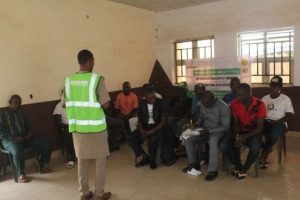
- Dialogue with Egba Community (1st July 2023): The meeting aimed to orient participants on the project’s goals, addressing challenges like bush burning, deforestation, erosion, water scarcity, famine, conflict over the Idogo Stream, and land encroachment, all exacerbated by continuous cropping and lack of boundary markings.
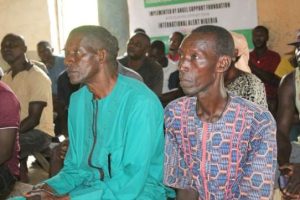
- A total of 24 (17M7F) individuals were reached.12 (7M5F) stakeholders and community members from Ologba participated and 12 (10M2F) stakeholders and community members from Egba.
Activity 1.2: Participatory Rural Appraisal for Development of Local Peace Adaptation Plans in Agatu Local Government Area
- Angel Support Foundation facilitated a joint meeting between the Egba and Ologba communities to develop Local Peace Adaptation Plans (LPAPs) through Participatory Rural Appraisal (PRA), with ASF providing an overview of the project and a recap of prior community meetings.
- In the opening session, ASF emphasized the importance of peace for fostering climate action development. Consultants Unongu Thomas and Engr. Agbo Thomas encouraged participants to share concerns and discuss the root causes of climate-induced conflicts.
- Ologba’s proposal, led by Mr. Micah Odogba, suggested turning the contentious fish ponds into tourist attractions to generate revenue and employment. Meanwhile, Egba’s Mr. Clement Oyaje proposed a formal peace agreement supported by ASF and International Alert.
- The session included group discussions among Elders, Women, and Youths on climate action and seed funding for A priority list was developed, and a committee, “Egba-Ologba Peace and Climate Adaptation Committee,” was formed to oversee implementation, with members elected from both communities.
- A total of 60 (48M 12F) stakeholders and community members
Activity 1.3 Community accompaniment/capacity building on advocacy for targeted leaders
- A training session was conducted for stakeholders on effective advocacy in climate action, inclusion, peace-building, and the development of Local Adaptation Plans (LAPs). The focus was on how stakeholders and committee members can advocate for positive climate actions within their communities and with local representatives.
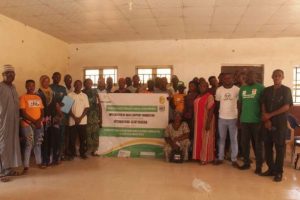
- The breakout sessions involved discussing community challenges in the first session and exploring solutions, identifying stakeholders, and strategies for resource mobilization in the second session.
- 60 (51M9F) committee members and stakeholders participated, with 30 participants from each of the two communities.
Activity 1.4 Community awareness (community theatre, radio program) and understanding of climate-related security risks and the potential conflict impacts of adaptation
- Community awareness efforts began with a radio talk show on Joy FM, based in Otukpo, Benue State, aimed at reaching the target audiences in Zone The discussion featured two opinion leaders from Ologba and Egba, focusing on climate-related security risks and peace-building. The speakers shared insights on the impact of climate change on their communities, ongoing adaptation efforts, and the role of the “Powering Peace through Climate Action” project in fostering peace.

- The radio talk show was followed by a community theatre event in Obagaji, a high-traffic area, where community members from Ologba and Egba delivered messages on climate change, mitigation, adaptation, and peace-building in their local dialects.
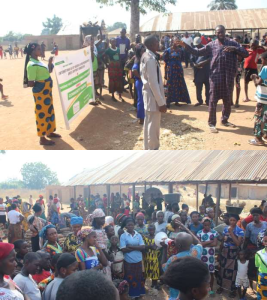
- A total of 26 community members, assisted by the ASF team, performed a dramatic sequence to raise awareness on these critical issues.
Activity 1.5 Training of Community Members for the Production of Briquettes
- Angel Support Foundation organized a training on briquette production, facilitated by community members who had previously been trained in Fiidi Council Ward. The training involved collecting dried maize stems, which were carbonized and combined with other materials to produce the briquettes.
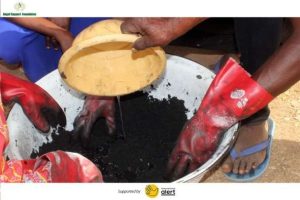
- On the first day, facilitators carbonized the maize stems and mixed the materials to produce the first batch of briquettes.
- In subsequent sessions, participants took over the carbonization and briquette production processes themselves. The remaining materials were handed over to a committee responsible for organizing future production sessions, ensuring sustainability and continued community engagement in briquette production.
- On 5th February 2024, 38 (9M 29 F) from the committee and selected participants attended while on 6th February 2024, 36 (7M 29 F) persons
- The total number of participants across both days was 74 (16M 58F).
Activity 1.6 Community Trust-building Event
- The trust-building event, attended by community members from Ologba and Egba, began with remarks from community representatives praising Angel Support Foundation and International Alert for their role in addressing the
- The event, aimed at healing, provided a platform for women from both communities to perform traditional songs and dances, symbolizing their commitment to peaceful coexistence.
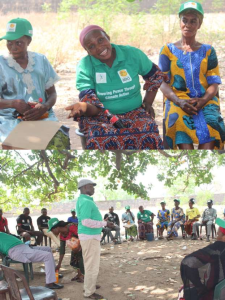
- The sharing of childhood memories emphasized past peaceful interactions and the potential for Community members pledged to counter fake news and address the root causes of the Idogo Stream dispute, committing to foster peace and work together for resolution.
- A total of 54 (34M 20F) from community stakeholders and members
Activity 1.7: Community Dialogues
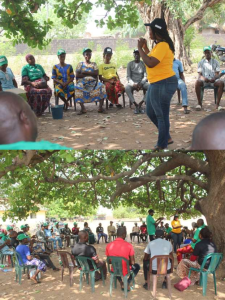
- One-day dialogue meeting with stakeholders from Egba, Ologba, and Ekaida communities in Agatu LGA, focusing on fostering peace, collaboration, and climate change adaptation through alternative dispute The dialogues explored the cultural and historical context of the crisis to address its root causes and promote peace.
- Outputs included increased understanding of perspectives, improved communication, and trust-building among community members, essential for conflict resolution and peaceful coexistence.
Activity 1.8: Peer Leaning and Signing of Peace Chatter
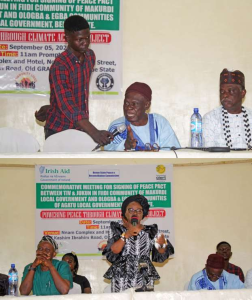
- A one-day peer learning and peace charter signing activity was held, bringing community members from Ologba, Egba, and Ekaida in Agatu LGA to They visited the FIIDI community to interact with the Junkum and Tiv communities, who have experienced conflict for over a decade. The learning sessions were impactful, offering new perspectives on the project’s gains.
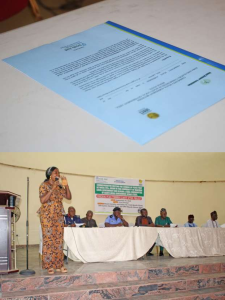
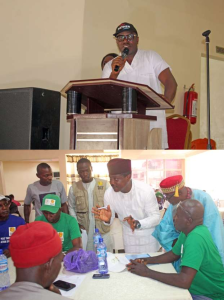
- The ceremony, attended by distinguished guests including the DG of the Peace and Reconciliation Commission, the Country Director of International Alert, the Paramount Ruler of Agatu LGA, the LGA Chairman, community leaders, and other government agencies, culminated in the signing of the peace charter by the Egba and Ologba communities, symbolizing their commitment to peace and reconciliation.
Activity 1.9: Community Dialogues
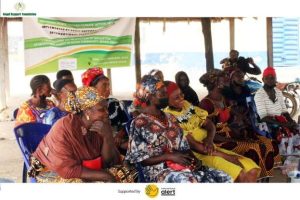
- One-day dialogue meeting with stakeholders from Egba, Ologba, and Ekaida communities in Agatu LGA to address grievances, foster peace, and plan for development. Discussions focused on skill center updates, cooperative formation, land release agreements, investment strategies, and machine security/storage.
- Key outcomes included resolving infrastructure issues, agreeing on cooperative leadership, finalizing land release and peace agreements, and establishing investment and security The meeting concluded with a roadmap for next steps and ongoing collaboration.
Key Achievements
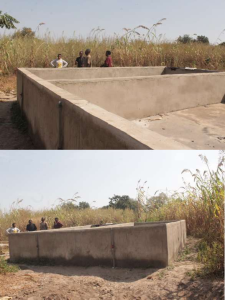
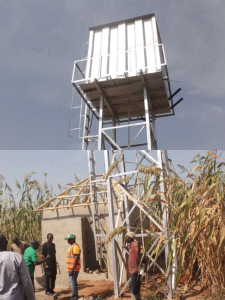
- Successfully constructed two boreholes with control houses to improve water
- Established a briquette production facility, equipped with a briquette machine and fish kiln to support sustainable energy solutions.
- Developed a community fish pond to enhance local food security and economic opportunities.
- Facilitated the formation of a cooperative association to encourage collective economic activities and community development.
- Secured the signing of a peace charter between the Ologba and Egba communities, promoting long-term peace and coexistence.
- Secured the signing of a land release agreement by donors for establidhment of a skill acquisition center in Ekaida community.
| Activity Title | No. of Times Conducted | Male | Female | Total Participants |
| Community Dialogues | 6 | 109 | 88 | 197 |
| Participatory Rural Appraisal | 1 | 48 | 12 | 60 |
| Capacity Building for Advocacy | 1 | 51 | 9 | 60 |
| Community Theatre | 2 | 56 | 22 | 78 |
| Radio Talk Show | 2 | – | – | 10,000 |
| Briquette Training | 2 | 16 | 58 | 74 |
| Trust-building Events | 1 | 34 | 20 | 54 |
| Peer Learning | 1 | 27 | 8 | 35 |
| Total | 375 | 183 | 10,558 |
Challenges ÂÂ
- Persistent ownership disputes over the community fish pond despite a court ruling in favor of Ologba, making conflict resolution complex.
- Non-functional boreholes that require proper connection and activation to serve the community effectively.
- Uninstalled briquette machine and fish kiln, preventing full operationalization of the briquette production initiative.
- Lack of funding for the cooperative association, limiting its ability to function and achieve sustainability.
- Fish pond not connected to a reliable water source, reducing its usability and potential benefits.
- Delayed construction of a garri processing hub, hindering planned community empowerment and economic initiatives.
Recommendations Â
- Facilitate continued dialogue and mediation sessions between Ologba and Egba communities to ensure long-term resolution of the fish pond ownership dispute.
- Enhance Infrastructure Functionality
- Expedite the connection and activation of boreholes to ensure they serve the community as intended.
- Install and operationalize the briquette machine and fish kiln to maximize the benefits of the briquette production center.
- Secure financial and technical support for the cooperative association to enhance its sustainability and impact.
- Engage donor agencies, government programs, and private sector partners to fund the garri processing hub construction.
- Ensure the fish pond is connected to a reliable water source to enhance its viability for community use.
- Strengthen capacity-building programs to equip cooperative members with skills in financial management, business planning, and cooperative
- Establish a community-led monitoring committee to oversee project implementation and ensure accountability.
- Conduct periodic reviews and impact assessments to measure progress and identify areas requiring further intervention.
Conclusion Â
The “Powering Peace through Climate Action” project has significantly contributed to addressing the challenges of climate change and conflict in Agatu Local Government Area, particularly in the Ologba and Egba communities. Through a
variety of interventions such as community dialogues, participatory rural appraisals, capacity-building programs, and trust-building activities, the project has successfully fostered dialogue, collaboration, and understanding between these communities, promoting peace and adaptation to climate impacts.
Key achievements, including the construction of boreholes, the establishment of a briquette production facility, and the development of a community fish pond, have created lasting improvements in both the environmental and socio-economic conditions of the communities. The signing of a peace charter between Ologba and Egba communities serves as a symbolic commitment to sustainable peace and coexistence.
Despite challenges such as ownership disputes, infrastructure issues, and delayed construction activities, the project has made notable strides toward its goal of building peace through climate action. Moving forward, addressing the outlined challenges and implementing the recommended strategies will be essential in ensuring the long-term success and sustainability of the interventions. Continued community engagement, infrastructure development, and capacity-building will be pivotal in fostering lasting peace and resilience in the region.
Annex
Table I :Result of Open Ballot Election to determine Priority Items
| S/N | ITEMS | VOTES SCORES | VOTES POSITIONS |
| 1 | Skills Acquisition | 8 | 1st |
| 2 | Fish drying kiln | 6 | 2nd |
| Â Â 3 | Irrigation pumps and accessories for dry season farming | Â Â 4 | Â Â Â Â 3rd |
| Â 4 | Tree crops planting (crops seedlings) | Â 1 | Â Â 4th |
| 5 | Market stalls construction | 1 | 5th |
Table II: List of Egba-Ologba Peace and Climate Adaptation Committee
Â
| S/N | NAME | SEX | POSITION | PHONE NO. | COMMUNITY |
| 1 | Oyeje Clement | M | Chairman | 08134477669 | Egba |
| 2 | Odoba Micah | M | Vice Chairman | 09033127000 | Ologba |
| 3 | Odoba Amos | M | Secretary | 08142917484 | Ologba |
| 4 | Aigbeche Magaji | M | Assistant Secretary | 09134206466 | Egba |
| 5 | James Elizabeth | F | Treasurer | 09037742403 | Egba |
| 6 | Oche Apoci | M | Financial Secretary | 08060429537 | Ologba |
| 7 | Ibrahim Jibrim | M | Auditor | 08066145191 | Egba |
| Â 8 | Â John Deborah | Â F | Public Relation Officer | Â 08130123244 | Â Ologba |
Table III: List of Egba, Ologba, Ekaida Unity Multipurpose Cooperative (EOEUM Cooperative) Members
Â
| S/N | Name | Sex | Position |
| 1. | Clement Oyaje | M | Chairman |
| 2. | Amos Micha | M | Vice Chairman |
| 3. | Amos Odoba | M | General Secretary |
| 4. | Aigeche Magaji | F | Assistant Secretary |
| 5. | Enenche James Egwuola | M | Treasurer |
| 6. | Oche Apochi | M | Financial Secretary |
| 7. | Jubrin Ibrahim | M | Auditor |
| 8. | John Musa | M | Public Relations Officer (PRO) |
| 9. | Samuel Otashe | M | Peace & Conflict Resolution Subcommittee Chair |
| 10. | John Anjanu | M | Environmental Subcommittee Chair |
| 11. | Jonah John | M | Supervision, Monitoring & Evaluation Subcommittee Chair |
Table IV. List of Peace and Conflict Resolution Committee
Â
| S/N | Name | Position |
| 1. | Samuel Otashe | Chairman |
| 2. | Usman Umoru | Member |
| 3. | Ochohapo Ogwoje | Member |
| 4. | Aliyu Sani | Member |
| 5. | Amina Tahiru | Member |
Table V: List of Environmental CommitteeÂ
| S/N | Name | Position |
| 1. | John Anjanu | Chairman |
| 2. | Ojotu Joseph | Secretary |
| 3. | Deborah Otene | Member |
| 4. | Andrew Ochechep | Member |
| 5. | Dorcas Sunday | Member |
Table VI: List of Supervision, Monitoring & Evaluation Committee
| S/N | Name | Position |
| 1. | Jonah John | Chairman |
| 2. | Aminu Musa | Member |
| 3. | Ochefije Usman | Secretary |
| 4. | Jubliana Emoga | Member |
| 5. | Esther Audu | Member |
| 6. | Aigeche Magaji | Assistant Secretary |
| 7. | Ocholonwa James | Public Relations Officer (PRO) |
| 8. | Tabitha Clement | Member |
Â
Â
Â